Ron Paul for President? While, to my knowledge, he has not garnered a strong showing in any of the poles, he has succeeded in making a name for himself as kind of "gadfly" for the Republicans. God knows they need one.
My question is this: just how rigid is his adherence to libertarian principles? It's one thing to argue that government interference in this or that affair will more than likely make a problem worse, its quite another to say that the gov. always makes things worse, or that gov. is only legitimate within the narrow limits of enforcing private contracts and protecting basic rights. It is here that Libertarianism as an economic and political philosophy seems to be incompatible with Catholic Social teaching. Gov. does not merely exist to serve the individual, but developed to protect and sustain larger social units such as the family and religion. Government has its role in protecting or promoting the common good as well as protecting private property and choice. For the contemporary Catholic facing a secular government more centralized and powerful than ever before, the temptation to view large government as a bane to Christian life is tempting, but misleading. The real problem with our current government, is not so much that it is powerful and centralized (although reasonable people can differ on how powerful and centralized our government needs to be), but that it misuses this power by tolerating or even promoting social evils. Libertarians, including Ron Paul, frequently wish to limit the government's involvement in drug use, traditional marriage, prostitution and pornography, not because they consider these things good or harmless to the individual, but because they fail to appreciate the social consequences of such things in other spheres of human life. Catholic teaching, on the other hand, teaches that such things not only harm the individual but undermine the larger social groupings that make legitimate freedom possible. In the case of pornography, the most desirable course of action would be to convince the purveyors and users of it to change their ways. But with human nature being in its fallen state, such efforts are bound to be limited in their outcome. A level of coercion is needed to protect those who would be affected negatively by pornography through no choice of their own (or without sufficient knowledge of its evil).
Saturday, September 1, 2007

Ron Paul on the Just War Tradition
Ron Paul, it seems, bases his crticisims of the Iraq war on Just War doctrine:
This is from an article he wrote concerning his Christian faith for The Covenant News (http://www.covenantnews.com/ronpaul070721.htm):
"I have also acted to protect the lives of Americans by my adherence to the doctrine of “just war.” This doctrine, as articulated by Augustine, suggested that war must only be waged as a last resort--- for a discernible moral and public good, with the right intentions, vetted through established legal authorities (a constitutionally required declaration of the Congress), and with a likely probability of success.It has been and remains my firm belief that the current United Nations-mandated, no-win police action in Iraq fails to meet the high moral threshold required to wage just war. That is why I have offered moral and practical opposition to the invasion, occupation and social engineering police exercise now underway in Iraq. It is my belief, borne out by five years of abject failure and tens of thousands of lost lives, that the Iraq operation has been a dangerous diversion from the rightful and appropriate focus of our efforts to bring to justice to the jihadists that have attacked us and seek still to undermine our nation, our values, and our way of life."
Brian's note: There is much more to Just War Doctrine than the above, of course, but it reveals that Paul's criticisms of the war are grounded in something deeper than his weak libertarian philosophy of government. If he would only reconsider some of his libertarian views in light of other political teachings that we have inhereted from the Christian tradition!
This is from an article he wrote concerning his Christian faith for The Covenant News (http://www.covenantnews.com/ronpaul070721.htm):
"I have also acted to protect the lives of Americans by my adherence to the doctrine of “just war.” This doctrine, as articulated by Augustine, suggested that war must only be waged as a last resort--- for a discernible moral and public good, with the right intentions, vetted through established legal authorities (a constitutionally required declaration of the Congress), and with a likely probability of success.It has been and remains my firm belief that the current United Nations-mandated, no-win police action in Iraq fails to meet the high moral threshold required to wage just war. That is why I have offered moral and practical opposition to the invasion, occupation and social engineering police exercise now underway in Iraq. It is my belief, borne out by five years of abject failure and tens of thousands of lost lives, that the Iraq operation has been a dangerous diversion from the rightful and appropriate focus of our efforts to bring to justice to the jihadists that have attacked us and seek still to undermine our nation, our values, and our way of life."
Brian's note: There is much more to Just War Doctrine than the above, of course, but it reveals that Paul's criticisms of the war are grounded in something deeper than his weak libertarian philosophy of government. If he would only reconsider some of his libertarian views in light of other political teachings that we have inhereted from the Christian tradition!
Monday, August 27, 2007
Compassion and the Evening News
Did you ever notice how natural catastrophes and political scandals make great conversation fillers? Picture yourself at a social gathering: family, friends, co- workers, whatever. Conversation begins to lag – what to do? Just mention the latest airplane crash or cover- up (“isn’t it horrible that…”) to arouse eloquent soliloquies of sympathy or indignation. It’s so easy and requires only an occasional glace at the headlines. Many, if not all of us, crave for a public forum to reveal the depths of one’s social sentiment – one’s “compassion” – for others.
One evening I was sitting with someone and they brought up the recent mining disaster in Utah (our conversation must have been lagging): “How about those poor miners in Utah?” I confessed that I hadn’t been tracking the story very closely. I was apparently missing out on the rescue operation that was beginning to resemble a Hollywood thriller. Furthermore, to my companion’s bewilderment, I was forced to admit that I hadn’t been following any of the headlines closely for quite some time. She informed me that things were quite intolerable in Chile, Texas and Bermuda. While my apparent indifference to these tragedies would have shocked most, she knew to take my exaggerations with a grain of salt.
But honestly, I am not terribly interested in learning of the dead coal miners, let alone the hundreds of disasters that plague our world every day. How then, can I avoid the accusation of apathy? The key, I believe, in distinguishing between real compassion and mere sentiment for its own sake.
In book three of his Confessions, Saint Augustine decries the vices of the Roman theatre: “I was carried away by plays on the stage in which I found plenty of examples of my own miseries and plenty of fuel for my own fire.” I thought to myself, “Stolen pears, bad behavior in school and the theatre; is that really the worst you have to give us?” But Augustine has a particular knack for drawing the most profound lessons from seemingly trivial events.
Augustine begins his reflection on the theatre with a question: why do people pay money for others to make them feel sorrow over misfortunes that they would not want to suffer themselves? In fact, the play would be deemed a success or failure precisely on its ability to arouse one’s feelings for the “misery” of others. Playgoers, suggests Augustine, want the experience of feeling “compassionate” without the undergoing the actual suffering that would accompany tragedy in real life: “A man listening to the play is not called upon to help the sufferer; he is merely invited to feel sad.”
This desire to feel sorrow for the misfortune of others is not in itself evil, of course. There are times when it is very appropriate. The real problem of the theatre, claims Augustine, is its radical separation of that desire from actual suffering with those involved (real compassion). He argues that tragic plays indulge sorrow for its own sake, rather than moving one to help bring about an end to that suffering: “This was the origin of my love for sorrows- not sorrows that really affected me deeply, for I did not like to suffer in my own person the things which I liked to see represented on stage, but only those imaginary sorrows the hearing of which had, as it were, the effect of scratching the surface of my skin.” One might object that Augustine either watched very trashy plays or is being a bit too harsh with the performance arts. Don’t the best of the tragedies, after all, have the potential to inspire us to leave the theatre and do something to alleviate suffering? But even if we grant this, Augustine’s primary point stands: If we are not careful, simulated tragedies will carry our emotions away from reality.
What does Augustine’s reflection of the ancient tragedies have to do with the today’s headlines? While Hollywood is the modern day equivalent to the Roman theatres, it could be argued the most immediate source of packaged and polished tragedy comes to us in the daily paper and evening news. Advances in technology enable us to know what is going on in all corners of the globe almost instantaneously without stepping one foot out of the comfort of the home. Have you ever considered why news agencies choose to report almost exclusively on negative events? They are catering to that same human need to feel badly for others. Genocide in Darfur, earthquakes in Peru, religious persecution in China - at any given time there are dozens of tragedies at our disposal. But if we seek this information without a corresponding movement to get involved, we are pursuing sorrow for its own sake.
It is an undeniable fact that there is little or nothing we can do about most of the tragedies we are bombarded with in the news. I say most because, from time to time, there is something we can do about this or that disaster through charitable organizations. It is possible that one could be moved by a news story to give one’s resources (or person) to help alleviate the tragedy. Or one could keep the sufferers in his or her prayers. But this is the exception rather than the rule: we would like to do something to help everyone who suffers in this “valley of tears”, but our radical finitude prevents us from doing so. Feeding on and fretting over news stories over which we have no control could easily lead to a divorce of sentiment and “suffering with” that comes with true compassion.
It seems that excessive knowledge of tragedies “out there” and the emotional resources we expend on them often serve as a convenient substitute for or distraction from localized tragedies that are open for our involvement. If one lives in authentic relationships with others – family, friends, neighbors, church community, etc… - one will always have a superabundance of “opportunities” for real compassion. The people around us: those we can touch, see, smell and interact with – all of them are wounded beings in need of healing love. If you don’t see their tragedies, you simply haven’t looked hard enough. So if I will not remain up to speed on Hurricane Dean’s path of destruction, it is only because I am trying (and often failing) to find or remain committed to the tragedies that God has called for me to play a part in.
One evening I was sitting with someone and they brought up the recent mining disaster in Utah (our conversation must have been lagging): “How about those poor miners in Utah?” I confessed that I hadn’t been tracking the story very closely. I was apparently missing out on the rescue operation that was beginning to resemble a Hollywood thriller. Furthermore, to my companion’s bewilderment, I was forced to admit that I hadn’t been following any of the headlines closely for quite some time. She informed me that things were quite intolerable in Chile, Texas and Bermuda. While my apparent indifference to these tragedies would have shocked most, she knew to take my exaggerations with a grain of salt.
But honestly, I am not terribly interested in learning of the dead coal miners, let alone the hundreds of disasters that plague our world every day. How then, can I avoid the accusation of apathy? The key, I believe, in distinguishing between real compassion and mere sentiment for its own sake.
In book three of his Confessions, Saint Augustine decries the vices of the Roman theatre: “I was carried away by plays on the stage in which I found plenty of examples of my own miseries and plenty of fuel for my own fire.” I thought to myself, “Stolen pears, bad behavior in school and the theatre; is that really the worst you have to give us?” But Augustine has a particular knack for drawing the most profound lessons from seemingly trivial events.
Augustine begins his reflection on the theatre with a question: why do people pay money for others to make them feel sorrow over misfortunes that they would not want to suffer themselves? In fact, the play would be deemed a success or failure precisely on its ability to arouse one’s feelings for the “misery” of others. Playgoers, suggests Augustine, want the experience of feeling “compassionate” without the undergoing the actual suffering that would accompany tragedy in real life: “A man listening to the play is not called upon to help the sufferer; he is merely invited to feel sad.”
This desire to feel sorrow for the misfortune of others is not in itself evil, of course. There are times when it is very appropriate. The real problem of the theatre, claims Augustine, is its radical separation of that desire from actual suffering with those involved (real compassion). He argues that tragic plays indulge sorrow for its own sake, rather than moving one to help bring about an end to that suffering: “This was the origin of my love for sorrows- not sorrows that really affected me deeply, for I did not like to suffer in my own person the things which I liked to see represented on stage, but only those imaginary sorrows the hearing of which had, as it were, the effect of scratching the surface of my skin.” One might object that Augustine either watched very trashy plays or is being a bit too harsh with the performance arts. Don’t the best of the tragedies, after all, have the potential to inspire us to leave the theatre and do something to alleviate suffering? But even if we grant this, Augustine’s primary point stands: If we are not careful, simulated tragedies will carry our emotions away from reality.
What does Augustine’s reflection of the ancient tragedies have to do with the today’s headlines? While Hollywood is the modern day equivalent to the Roman theatres, it could be argued the most immediate source of packaged and polished tragedy comes to us in the daily paper and evening news. Advances in technology enable us to know what is going on in all corners of the globe almost instantaneously without stepping one foot out of the comfort of the home. Have you ever considered why news agencies choose to report almost exclusively on negative events? They are catering to that same human need to feel badly for others. Genocide in Darfur, earthquakes in Peru, religious persecution in China - at any given time there are dozens of tragedies at our disposal. But if we seek this information without a corresponding movement to get involved, we are pursuing sorrow for its own sake.
It is an undeniable fact that there is little or nothing we can do about most of the tragedies we are bombarded with in the news. I say most because, from time to time, there is something we can do about this or that disaster through charitable organizations. It is possible that one could be moved by a news story to give one’s resources (or person) to help alleviate the tragedy. Or one could keep the sufferers in his or her prayers. But this is the exception rather than the rule: we would like to do something to help everyone who suffers in this “valley of tears”, but our radical finitude prevents us from doing so. Feeding on and fretting over news stories over which we have no control could easily lead to a divorce of sentiment and “suffering with” that comes with true compassion.
It seems that excessive knowledge of tragedies “out there” and the emotional resources we expend on them often serve as a convenient substitute for or distraction from localized tragedies that are open for our involvement. If one lives in authentic relationships with others – family, friends, neighbors, church community, etc… - one will always have a superabundance of “opportunities” for real compassion. The people around us: those we can touch, see, smell and interact with – all of them are wounded beings in need of healing love. If you don’t see their tragedies, you simply haven’t looked hard enough. So if I will not remain up to speed on Hurricane Dean’s path of destruction, it is only because I am trying (and often failing) to find or remain committed to the tragedies that God has called for me to play a part in.
Wednesday, August 1, 2007
Purpose
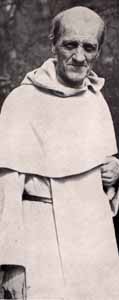
Welcome to my new blog. I was thinking the other day on how much time is wasted in frivolous communication over the internet. Better to see a man in the flesh, no matter how much of a bore he may be, than to be constantly flooded with pictures from his latest vacation or party. The internet, it seems to me, can never authentically transmitt the personal demension of our existence. To live under the illusion that one can communicate his person through this medium is nothing short of a new Manicheanism - a radical detachment of body and spirit. I want to see the expression on your face, the nervous twitching of your body, the change in the tone of your voice when you: invite me to an event, speak of your likes and dislikes, quote profound authors or, God forbid, reveal something deeply personal about yourself.With that said, I think that the internet has the potential to be a medium for sound argumentation and disputatio. It's potential for this lies precisely in the fact that it is impersonal. Arguments may stand or fall, not on the basis of who writes them, but on their soundness. This is not an overly optimistic evaluation of what is out there. Blogging is frequently used by wannabes and crackpots in order to attack and air opinions that would otherwise be dismissed by healthy human interaction. But there are just as many, in my opinion, who use blogging for honest pursuits.The primary purpose of this blog is for a college student to concretize what is developing in his mind as he pursues an education. To learn without attempting to apply that learning whenever possible would strike me as a utter waste of God's gift.NOTICE: I make no claim to be an authority on matters addressed here. I stand ready to be corrected by anyone.While I reserve the "right" to write about anything that strikes me of interest, the overall thrust of the blog will be to articulate a Catholic world- view grounded in Thomistic principles. Particular focus will be on cultural, political and economic matters and I hope to draw from Leo XIII's encyclical Rerum Novarum extensively. Father Vincent McNabb is the title and inspiration of the blog for a number of reasons. First, he was a Dominican friar intent on preaching uncompromisingly the fullness of the Faith. Second, he employed Catholic social principles to challenge modern society and articulate an alternative Catholic model. Finally, he lived the life he espoused: shunning the comforts of the modern economy, practicing generosity and looking for signs of God in simple living.
Subscribe to:
Posts (Atom)